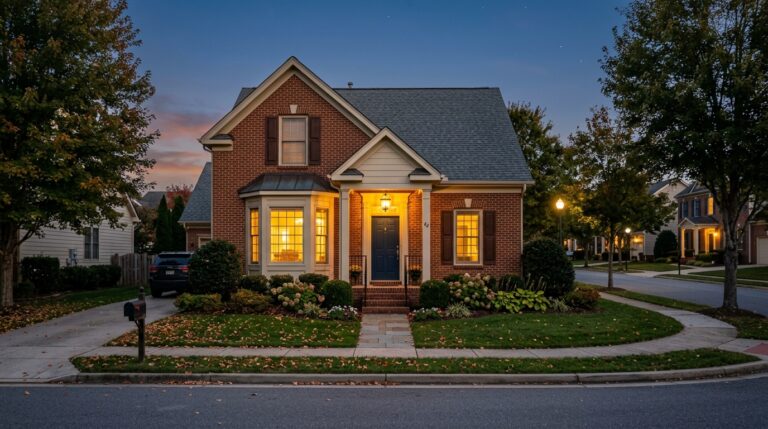
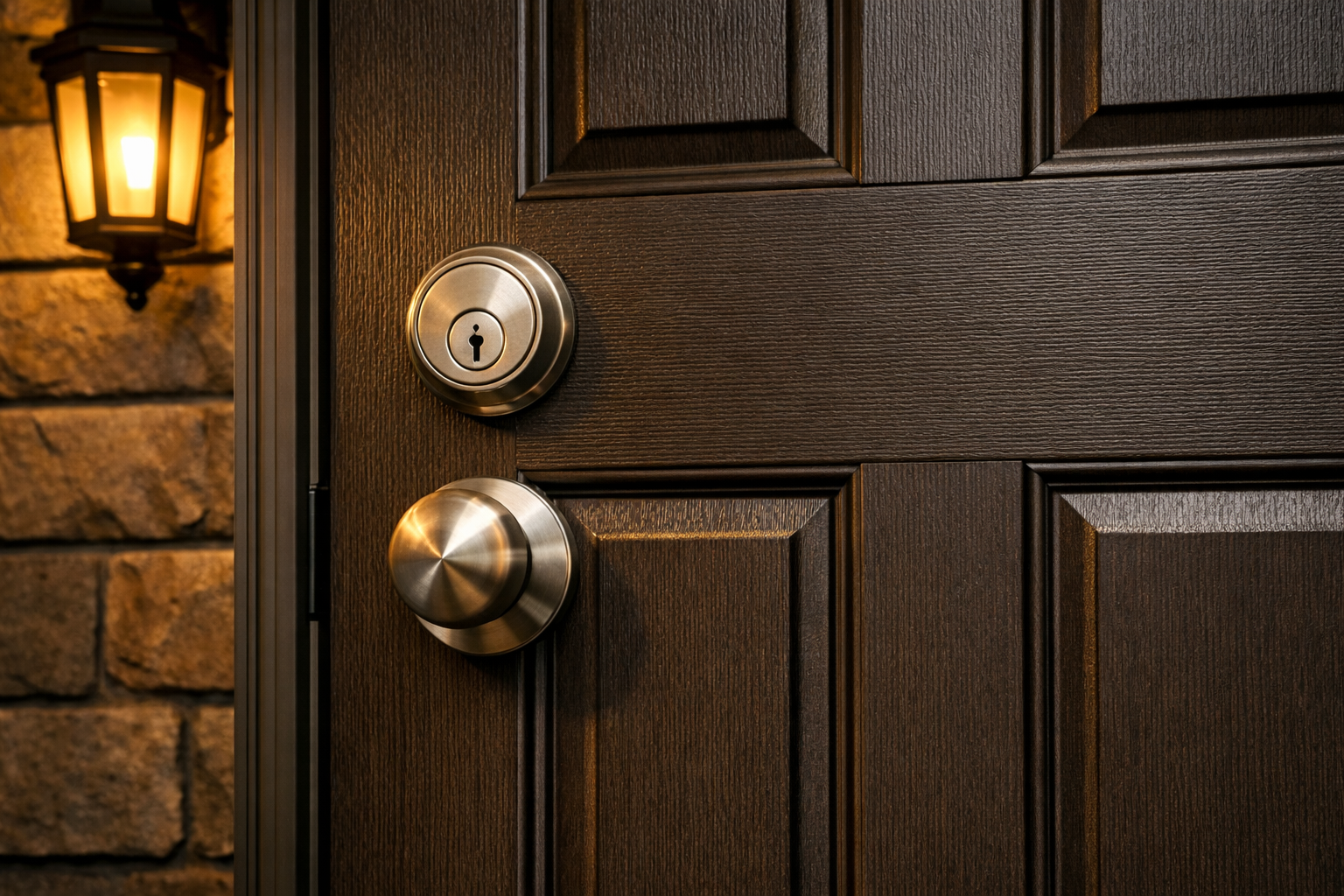
Knowing how to make your home more secure doesn’t require a professional security system, a Ring camera on every corner, or a significant budget. Most home break-ins aren’t sophisticated operations — they’re opportunistic. An unlocked door, a dark entryway, a hidden spare key under the mat. The things that make a home an easy target are almost always fixable in an afternoon.
Here’s what actually makes a difference, in order of impact.
How to Make Your Home More Secure: Start With the Doors
Around 34% of burglars enter through the front door. Not by picking the lock but by kicking it in, or walking through one that was simply unlocked. The door itself is often fine. What fails is the frame and the hardware around it, which is exactly where the question of how to make your home more secure should start.
A standard door frame can be kicked in with one solid strike because the strike plate (the metal plate where the deadbolt meets the frame) is usually secured with screws that are only 3/4 inch long. Replace those with 3-inch screws that reach the structural framing behind the door casing. It takes ten minutes and costs under $5. It’s one of the single most effective security upgrades available.
- Install a deadbolt if you don’t have one: a doorknob lock alone offers minimal resistance to forced entry.
- Consider a door reinforcement kit (brands like Door Armor or StrikeMaster II) if the door frame itself is weak or hollow.
- Sliding glass doors can be secured with a cut-down wooden dowel or metal bar in the track, an inexpensive and effective fix.
The goal isn’t to make entry impossible — it’s to make it take long enough and make enough noise that an opportunist moves on. Most will.
Windows Are the Second Entry Point
Windows are the second most common entry point, and they’re often overlooked entirely. Ground floor windows, especially those not visible from the street, are the most vulnerable.
- Window locks that come stock are often weak. Pin locks or keyed window locks are a step up and cost a few dollars each.
- Window security film won’t prevent a break, but it holds the glass together when it does, slowing entry significantly and creating noise.
- For windows you rarely open, a simple wooden dowel or adjustable window bar in the track works the same way it does on sliding doors.
Basement windows deserve specific attention. They’re low-visibility, often forgotten, and easy to force. A window well cover and a secondary lock on basement windows is worth the hour it takes.
Lighting Changes the Calculation Entirely
Darkness is cover. Motion-activated lights around entry points (front door, back door, garage, side gates) remove that cover and create the kind of sudden attention that deters opportunistic criminals immediately.
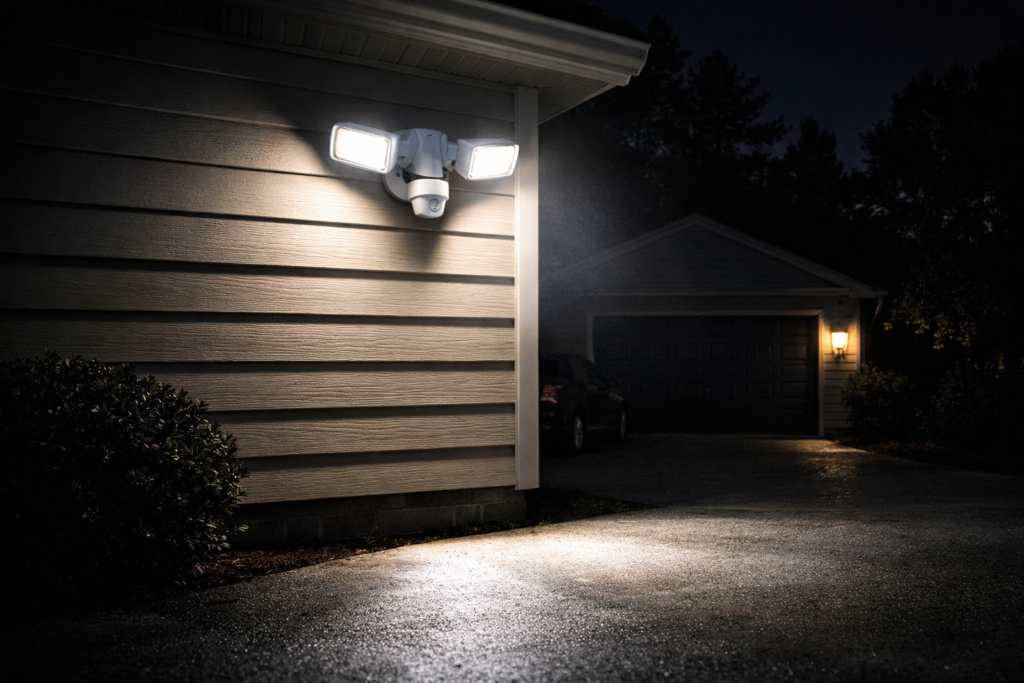
Solar-powered motion lights have gotten genuinely good and require no wiring. A set covering the front and back of a house runs $40-80 and takes an afternoon to install. Position them so they illuminate entry points and pathways, not just the open yard.
Beyond security, a well-lit home exterior makes the house look lived-in. And that alone can be enough to make someone move on to an easier target.
Landscaping Is a Security Feature
Overgrown shrubs near windows and entry points provide cover for someone who wants to work unseen. Trimming bushes below window height and keeping trees near the house pruned removes that cover.
Thorny plants (like roses, barberry, and holly) planted under first-floor windows are an old-fashioned but effective deterrent. Nobody wants to force a window through a rose bush.
Gravel pathways and driveways create noise when walked on. It’s a low-tech early warning system that’s been used for centuries.
The Spare Key Problem
A spare key under a rock, above the door frame, or under the mat isn’t a backup plan. It’s an entry point. Anyone watching a house for more than a few minutes knows where to look. The same goes for magnetic key boxes on car bumpers that end up in the same spot every time.
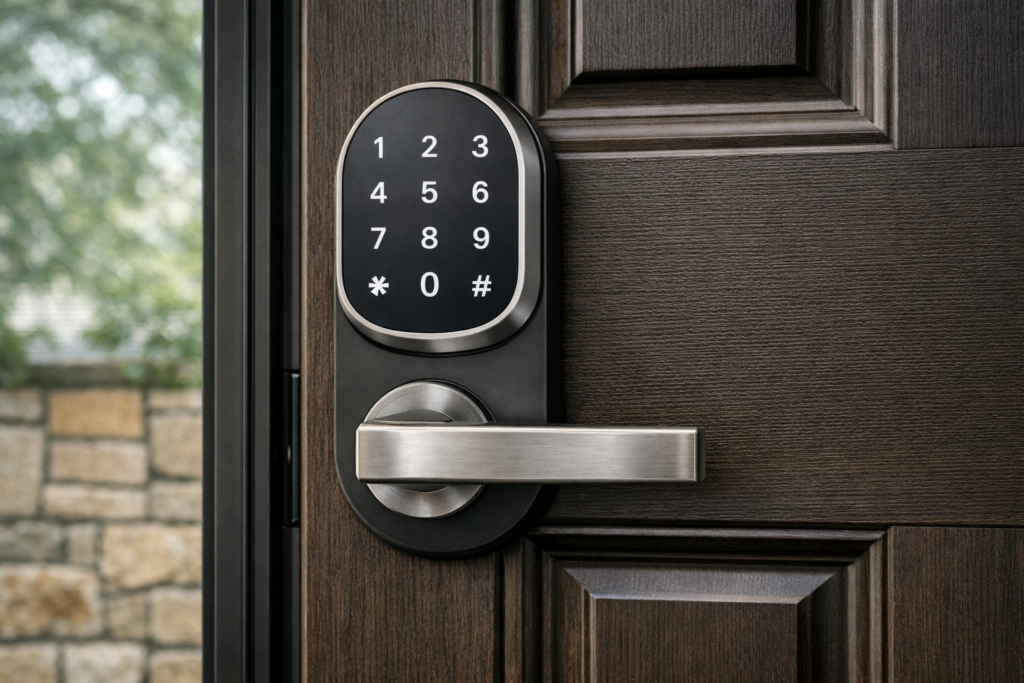
A keypad door lock eliminates the problem entirely. You can give family members and trusted people their own codes, change codes when needed, and never worry about a physical key being copied or found. Entry-level keypad deadbolts start around $40 and are straightforward to install.
If you don’t want to change the lock, a combination lockbox that can be mounted somewhere non-obvious is a better solution than a hidden key. The key is secured but accessible to people who know the code.
Build a Habit of Basic Checks
Most home security failures aren’t hardware failures. They’re habit failures. A locked deadbolt on a door that someone forgot to close. A first-floor window left open overnight. The garage door that was never shut after bringing in groceries.
A simple nightly check before bed (front door, back door, garage, first-floor windows) takes about 90 seconds and eliminates the most common vulnerabilities. It’s not glamorous advice, but it accounts for more prevented break-ins than any hardware upgrade.
Don’t Advertise When You’re Away
A secured home is most vulnerable when it looks unoccupied. Mail piling up at the door, a dark house for several nights in a row, an overflowing recycling bin: these are signals that nobody’s home, and they’re visible from the street. A few habits address this without much effort.
Put interior lights on timers when you travel. A lamp in the living room that turns on at dusk and off at 10pm gives the impression of occupancy at virtually no cost. Smart plugs make this straightforward, but a $10 mechanical timer from the hardware store works just as well. Pair it with a porch light on a separate timer and the house looks lived-in from outside.
Put a hold on mail and package delivery before any extended time away. A neighbor picking up packages is the next best option. And social media posts about being out of town, or photos that make it obvious, are worth holding until you’re back. It’s not paranoia; it’s the same logic as not leaving a note on the front door. These same habits matter even more for anyone figuring out how to feel safer living alone, where there’s no second set of eyes on the house while you’re gone.
What You Don’t Need to Start With
Security cameras, alarm systems, and smart home monitoring all have their place. But they’re not where most households should start. A camera that records a break-in is less useful than a deadbolt that prevented it. An alarm that triggers after someone is already inside is less useful than lighting that deterred them from approaching.
Knowing how to make your home more secure starts with the basics: reinforced doors, secured windows, good lighting, and consistent habits. Get those right first. The technology can come later and will work better once the fundamentals are in place.
What is the most effective way to secure your home?
Reinforcing door frames with 3-inch screws is one of the highest-impact and lowest-cost upgrades available: most doors are kicked in at the frame, not the lock. Combined with a deadbolt, motion-activated lighting at entry points, and secured windows, this covers the vulnerabilities most break-ins exploit.
How can I make my home more secure without an alarm system?
Motion-activated lights, reinforced door frames, window locks and security film, trimmed landscaping near entry points, and consistent locking habits address the most common entry points without any monthly monitoring fee. Most burglaries are opportunistic and deterred by these basic measures.
Where do most burglars enter a home?
Around 34% of break-ins happen through the front door, often through forced entry at the frame rather than a picked lock. First-floor windows and back or side doors are the next most common entry points. Securing these three areas eliminates the vast majority of vulnerability.