The question of how much water to store per person has a simple official answer and a more useful real-world answer. FEMA’s recommendation is one gallon per person per day. That’s the floor — enough to stay alive. Whether it’s actually enough depends on what you’re planning for and how you intend to use it.
Here’s the full picture, without the guesswork.
The One Gallon Rule — And Its Limits
One gallon per person per day comes from the bare minimum needed for drinking and basic sanitation. It assumes you’re sedentary, the weather isn’t extreme, and you’re not doing anything physically demanding. Under those conditions, it works.
In practice, one gallon per day starts feeling tight quickly. Cooking uses water. Washing hands uses water. If you have pets, they need water too. If anyone in the household is pregnant, nursing, sick, or elderly, their needs are higher. In a hot climate or during summer, needs go up further.
Think of one gallon as the absolute minimum for survival, not the amount for living reasonably well during a disruption. Two gallons per person per day is a more honest target for real-world comfort.
How Much Water to Store Per Person: Practical Targets
Here’s how to think about it based on how long you’re planning to be without normal water access:
- 72-hour minimum (3 days): 3 gallons per person at 1 gallon/day, or 6 gallons at the more realistic 2 gallon target. This is what FEMA recommends as the basic starting point.
- Two-week supply: 14-28 gallons per person. This is the target for most serious preparedness planning and covers real-world situations: extended power outages, storm recovery, and water system contamination or loss.
- 30-day supply: 30-60 gallons per person. Achievable with the right containers, and where most dedicated preppers aim eventually. Requires dedicated storage space.
For a family of four targeting two weeks: that’s 56-112 gallons of water. It’s more than most people picture when they first think about water storage, which is exactly why it’s worth planning ahead rather than improvising.
Storage Options That Actually Work
The container matters almost as much as the quantity. Not all storage options are equal:
- Store-bought bottled water: convenient and portable, but expensive per gallon and generates a lot of plastic. Fine for a short-term starter reserve. The commercial bottles are designed for single use and degrade over time.
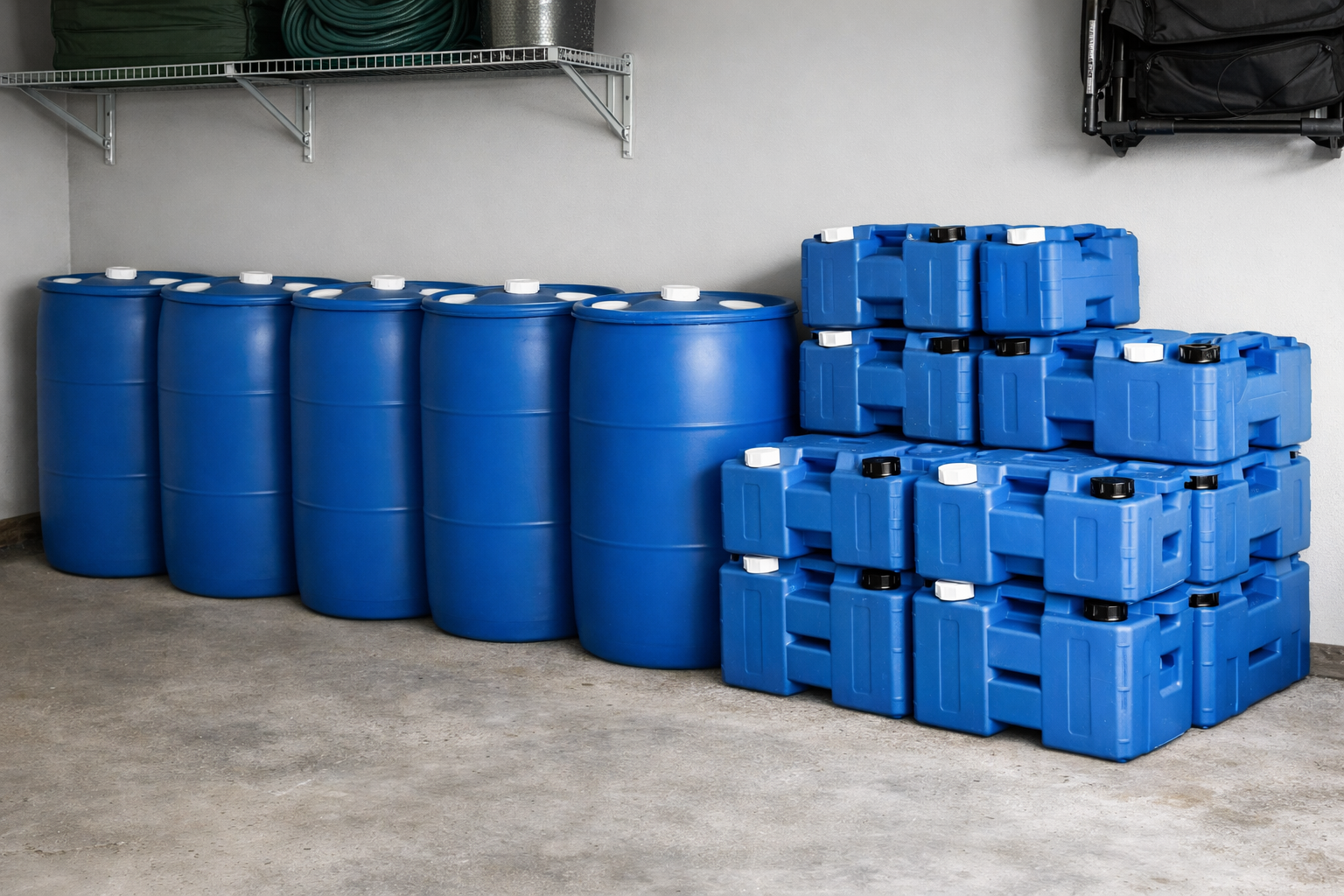
- Water bricks or stackable containers (3.5-7 gallon): purpose-built for storage, stack neatly, easy to move. A good option for households without much floor space.
- 55-gallon barrels: the most cost-effective per gallon for serious storage. Requires a hand pump to access the water, a stable floor to hold the weight (about 460 lbs full), and enough space to store it. Common in garages and basements.
- WaterBOB or Aquapod: bathtub liners that hold 65-100 gallons of water. Only useful if you fill them before something goes wrong. They’re useless after water pressure drops. Good for hurricanes with warning time.
Whatever containers you use, keep them away from direct sunlight, away from chemicals or gasoline, and off concrete floors where possible. Concrete can leach chemicals into plastic over time, but a simple pallet or shelving unit solves it.
How Long Does Stored Water Last?
Commercially sealed water bottles are typically dated 1–2 years. The water itself doesn’t expire; the date reflects potential plastic leaching from the container. Water stored in proper food-grade containers that was treated before storage can last much longer.
Home-filled containers should be rotated every 6-12 months as a general rule. Use the water, refill, and mark the date. This also confirms your storage system works, and that you’re using water that tastes fresh rather than flat.
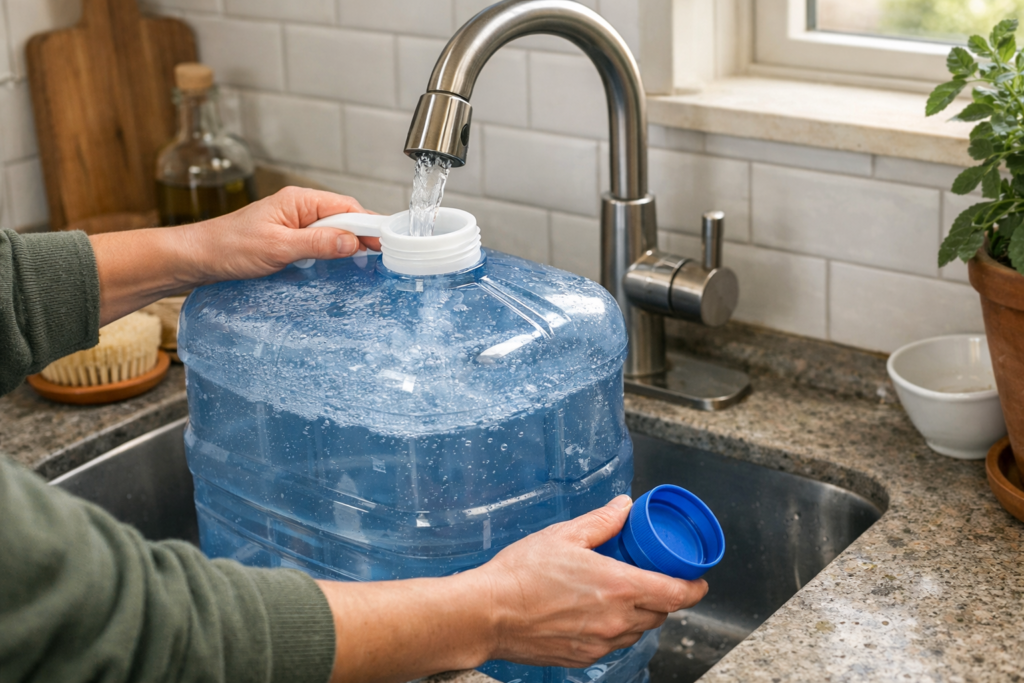
Adding a small amount of unscented liquid chlorine bleach (8 drops per gallon of clear water) to home-filled containers will treat it and extend safe storage life. This is the same basic chemistry municipal water systems use.
Don’t Forget Water for Cooking and Hygiene
The most overlooked part of water storage planning is non-drinking uses. You need water to rehydrate dried and canned foods, to clean cooking surfaces, and for basic hygiene, particularly handwashing, which matters a great deal during health-related disruptions.
A separate, clearly labeled container of water designated for cleaning and sanitation (not drinking) can help stretch your drinking reserve further and keep the math cleaner.
What If You Run Out?
Knowing how much water to store per person also means knowing what to do if your stored supply runs short. Natural water sources (streams, rain, ponds) can be treated with filtration and purification, and knowing how to purify water without electricity is worth learning before you ever need it.
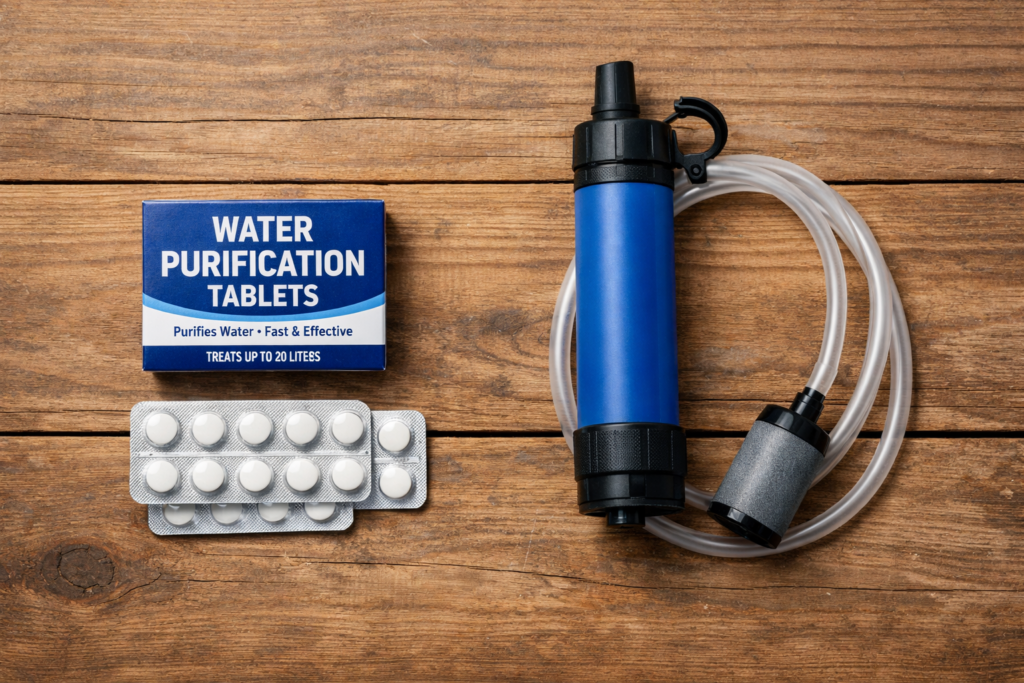
A quality water filter like a Sawyer Squeeze or LifeStraw can filter thousands of gallons. Water purification tablets (iodine or chlorine-based) are inexpensive and take up almost no space. Having at least one of these as a backup means your stored water reserve isn’t the end of your options. It’s just the most convenient one.
Build Your Supply in Stages
The numbers above can feel overwhelming if you look at the end goal and try to get there all at once. A family of four building a 30-day supply needs 120 to 240 gallons, and exactly zero people have that sitting in their garage on day one. That’s not the point.
Start with 72 hours. Get to two weeks. Then extend from there if it makes sense for your situation. Each stage meaningfully improves your position: moving from nothing to a 72-hour supply is a bigger leap in real-world readiness than going from two weeks to a month.
A practical starting move: pick up a few cases of bottled water this week. It’s not the most efficient storage format, but it gets you to 72 hours quickly and costs almost nothing extra if you’re already buying water. From there, invest in proper food-grade containers and build toward the two-week target. A pair of 5-gallon stackable jugs every few weeks adds up faster than it sounds. If you have the space for it, learning how to collect rainwater at home is a free, ongoing way to keep your reserve topped off without another trip to the store.
Label everything as you build. Date your containers when you fill them, and keep the rotation schedule simple enough that you’ll follow it. The best water storage plan is one that gets maintained, not one that sits forgotten in a corner until you need it and discover the containers are three years past their rotation date.
The Bottom Line on How Much Water to Store Per Person
Every household’s numbers will be a little different (pets, medical needs, climate, and family size all move the math), but the basic approach still works.
Water is the one supply you genuinely cannot improvise around. Food, light, warmth: there are workarounds for most of it. Water is different. Getting this part of your preparedness plan right, before you need it, is what separates a household that gets through an emergency calmly from one that spends the first 48 hours scrambling.
How much water should I store for emergencies?
FEMA recommends one gallon per person per day as a minimum. A more realistic target for daily comfort — including cooking and basic hygiene — is two gallons per person per day. For a two-week supply, aim for 14-28 gallons per person.
How long can you store water at home?
Commercially bottled water typically carries a 1-2 year date, though the water itself doesn’t expire. Water stored in clean, food-grade containers with a small amount of chlorine bleach added can last 6-12 months. Rotate and refill on that schedule to keep your supply fresh.
What are the best containers for storing water at home?
Purpose-built water storage containers like water bricks or stackable 5-7 gallon jugs work well for most households. For larger quantities, 55-gallon food-grade barrels are the most cost-effective per gallon. Whatever you choose, keep containers away from sunlight, chemicals, and direct concrete contact.