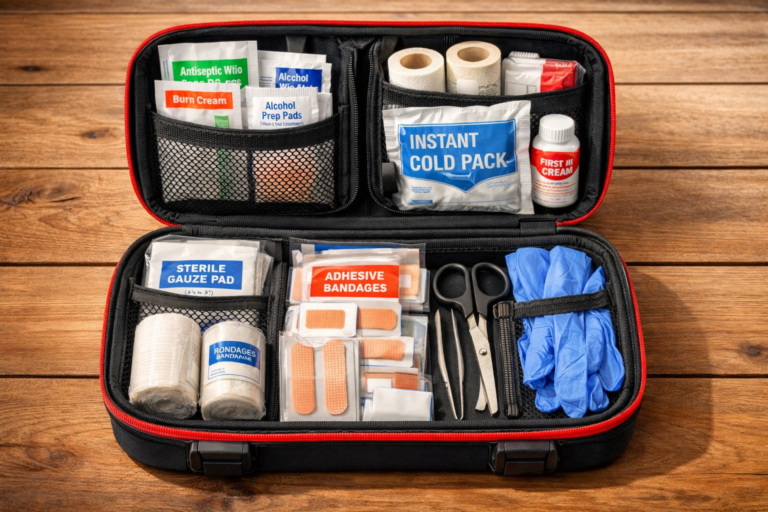

Knowing what medications to have on hand is one of those preparedness basics that gets overlooked precisely because it feels like something you can handle later. Then later arrives: a sick kid at 11pm, a weekend power outage, a situation where getting to a pharmacy isn’t straightforward. And you find out what’s actually in the cabinet.
The goal isn’t a pharmacy in the spare bedroom. It’s a household supply that covers the most common health problems without requiring an urgent trip out.
Over-the-Counter Essentials
These are the medications that address the most frequent health needs a household encounters. Most are inexpensive, have long shelf lives, and cover a wide range of conditions.
Pain relief and fever reduction: Ibuprofen and acetaminophen are not interchangeable: they work through different mechanisms and can be alternated for stronger fever management. Have both. Households with children need age-appropriate formulations of each.
Antihistamines: Diphenhydramine (Benadryl) for acute allergic reactions and insect bites. Loratadine or cetirizine for ongoing allergy management without the drowsiness. Each covers a different case.
Antacids: Calcium carbonate tablets (like Tums) work quickly for fast relief. Famotidine works more slowly, but it keeps acid down for hours instead of minutes. Both are useful for different severities of indigestion and reflux.
Anti-diarrheal and electrolytes: Loperamide is the standard. Pair it with oral rehydration salts. Dehydration management is as important as stopping the symptoms, especially for children and older adults.
Decongestants and cough: Pseudoephedrine for congestion, guaifenesin for chest congestion, dextromethorphan for cough suppression. These have shorter shelf lives, so rotate them more frequently.

Alternating ibuprofen and acetaminophen isn’t a marketing gimmick — in a fever that won’t break, doctors actually use that rotation every few hours. Having only one in the cabinet limits your options.
Wound Care Medications
Antibiotic ointment reduces infection risk in minor cuts and scrapes. Standard for the everyday mishaps that make up most first aid.
Hydrocortisone cream (1%) handles insect bites, minor skin irritation, and contact dermatitis. A small tube covers a surprising range of itching and mild inflammatory reactions.
Antifungal cream for athlete’s foot and similar conditions. Relevant for athletes, people in humid climates, or anyone prone to these infections.
Eye wash or sterile saline solution belongs here too. Splashes, debris, and chemical contact are more common than most people account for, and flushing an eye properly in the first few minutes matters more than almost anything else you can do.
Moleskin or blister treatment is worth having if anyone in the household hikes, does physical labor, or might be walking significant distances in an emergency. A blister that isn’t managed properly becomes a real problem fast, and the fix is inexpensive and takes up almost no space. These wound care basics work best alongside the rest of a proper home first aid kit, where bandages, gauze, and tape live together with everything else you’d reach for first.
What Most Households Are Missing
Prescription backup supply: Anyone who takes daily prescription medications should have a small backup if possible. Discuss this with your doctor or pharmacist. A supply disruption or illness that prevents a pharmacy trip becomes significantly more serious without this.
Naloxone (Narcan): Now available over the counter at most pharmacies. For households with anyone who takes prescription opioids, this is life-saving medication that reverses overdose in minutes and has no negative effect if opioids aren’t involved.
Aspirin (full strength): Not for everyday pain relief, but for cardiac emergencies. Chewing a regular-strength aspirin while waiting for emergency services is a standard first-response measure. Keep it separate from your pain reliever supply.
The backup prescription supply is the most important item most households don’t have. It requires a conversation with a doctor, but it’s a conversation worth having, especially for medications that can’t be safely interrupted.
Storage and Rotation
The bathroom medicine cabinet is one of the worst places to store medications due to humidity from showers. Better options: a bedroom closet shelf, a cool dry kitchen cabinet away from the stove, or a small lockbox if children are in the household.
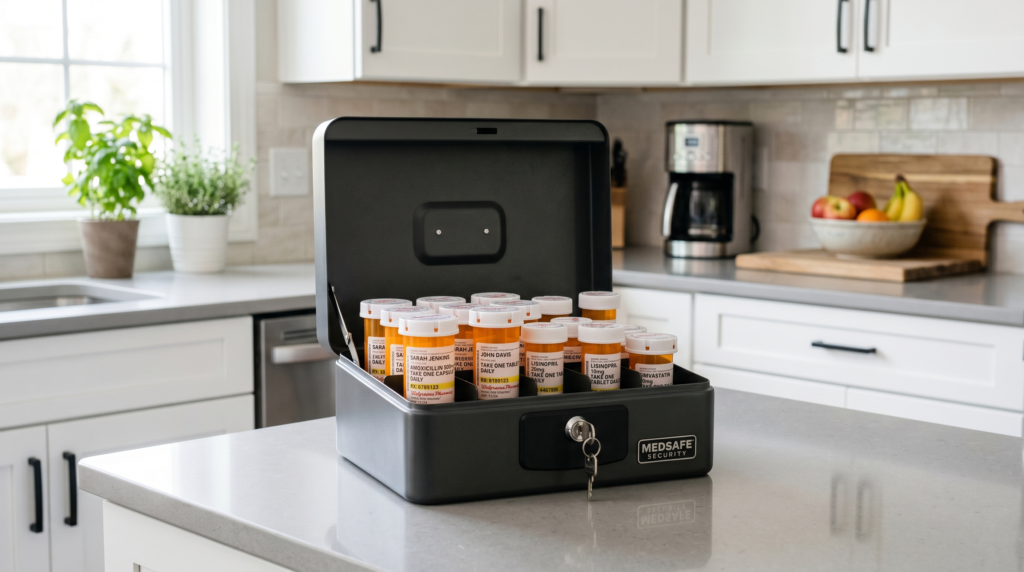
A once-a-year check (same day as smoke detector batteries and first aid kit review) is enough maintenance for most supplies. Replace anything expired or depleted.
Expiration Dates: What They Actually Mean
Expiration dates on medications reflect the manufacturer’s guarantee of full potency under ideal storage conditions, not the date the medication becomes dangerous. For most stable solid medications like ibuprofen, acetaminophen, and antihistamines, studies have found potency well above 90% years past the labeled date, assuming they’ve been stored correctly. That said, replacing them on schedule is still the right call: partly for peace of mind, and partly because degraded potency at exactly the wrong moment is a bad tradeoff.
Liquid medications, eye drops, and anything that has been opened degrade faster than sealed solids. Insulin, nitroglycerin, and epinephrine are in a separate category entirely. Follow those expiration dates strictly. The general rule: the more critical the medication and the more complex its formulation, the less flexibility you have on the date.
Heat and humidity accelerate degradation faster than time. A medication stored in a bathroom cabinet through two summers has lost more potency than the same medication sitting on a cool, dark shelf a year past its printed date. Where you store it matters as much as when you replace it.
What Medications to Have on Hand — and What to Do With Them
Knowing what medications to have on hand is the first step. Knowing when and how to use them is the second. A household where multiple adults know what’s in the cabinet, what it treats, and what the dosing guidelines are is genuinely better prepared than one where only one person has that knowledge.
It also helps to keep a simple printed reference (dosing guidelines for adults and children, a list of drug interactions to avoid, and emergency contacts) stored with the supply itself. A smartphone is useful until it isn’t, and a laminated card costs nothing. The households that handle medical situations calmly tend to be the ones that thought through these details before they needed them.
This stuff pays off exactly when you don’t expect it, usually at the worst possible moment. A household that’s thought this through once is in a fundamentally different position than one that hasn’t, and the gap between the two is a few hours of preparation, not a significant investment.
What over-the-counter medications should I always have at home?
The essentials are ibuprofen and acetaminophen (have both as they work differently), an antihistamine, antacid, anti-diarrheal, and electrolyte supplements. Wound care basics include antibiotic ointment and hydrocortisone cream. For households with children, keep age-appropriate formulations of everything.
How do I store medications at home properly?
Keep medications in a cool, dry, dark location, not the bathroom, which gets humid from showers. A bedroom closet shelf or kitchen cabinet away from heat sources works well. Check your supply once a year and replace expired items.
Should I keep prescription medications in my emergency supply?
Yes, if possible. Anyone who takes daily prescription medications should discuss a backup supply with their doctor or pharmacist. Medications that can’t be safely interrupted (blood pressure, thyroid, diabetes) are the priority.