Knowing what to keep in your car for emergencies is the kind of preparation most people intend to do and never get around to. Then they’re stranded on the side of a highway at night, or stuck in a snowstorm with no blanket, or dealing with a flat tire and realizing the jack’s still in the garage from when they took it out three months ago.
The car emergency kit doesn’t need to be elaborate or expensive. It needs to cover the things that actually happen to people, in the situations they actually find themselves in.
What to Keep in Your Car for Emergencies: The Situations You’re Actually Preparing For
A car emergency kit isn’t built for a zombie apocalypse. It’s built for the mundane things that go wrong on real roads: a dead battery, a flat tire, an unexpected overnight stay in a stranded vehicle, a minor accident, or a breakdown in weather that makes waiting outside uncomfortable or dangerous. Figuring out what to keep in your car for emergencies starts with these specific, ordinary situations, not worst-case scenarios.
Those situations have specific needs. Build the kit around them and it stays manageable in size and cost.
Vehicle-Specific Essentials
These are the items that deal with the car itself failing:
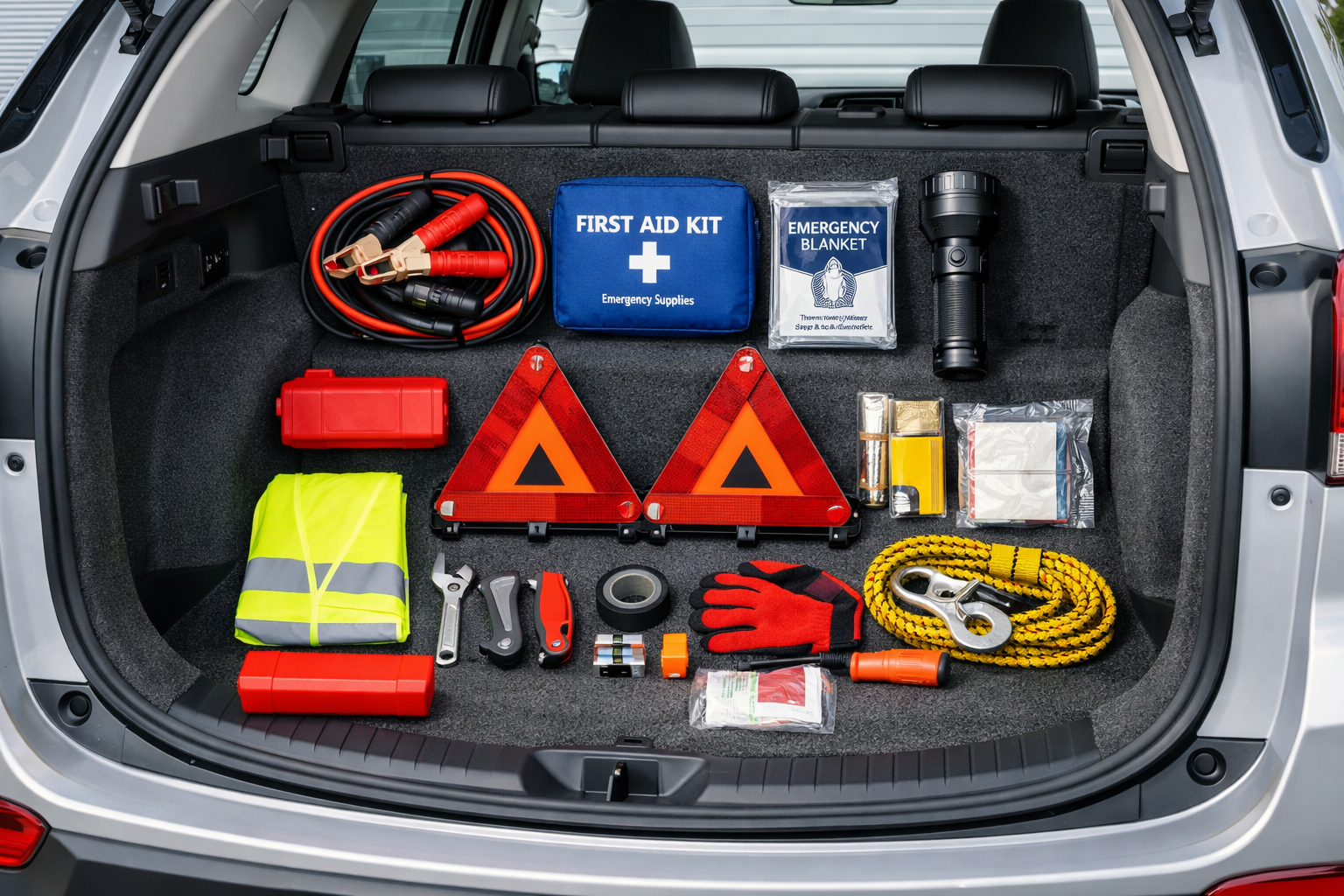
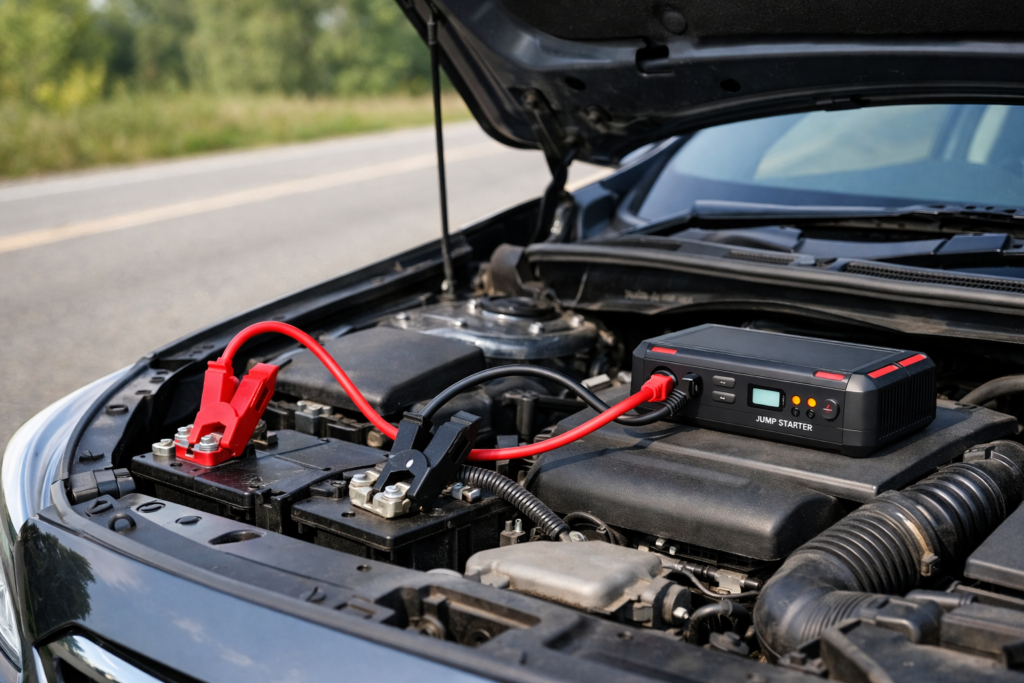
- Jumper cables or a portable jump starter — a dead battery is the most common roadside emergency. A portable lithium jump starter (around $50-80) is more versatile than cables because it doesn’t require another car. It also doubles as a phone charger.
- Tire inflator and sealant (Fix-a-Flat or similar) — handles slow leaks and minor punctures without requiring a full tire change. Not a permanent fix, but gets you to a shop.
- Spare tire in working condition, a jack, and a lug wrench — know where yours are and confirm the spare isn’t flat. Check it once a year.
- Reflective warning triangles or road flares — more visible than hazard lights alone, especially at night or around blind curves. Required equipment in many countries for good reason.
- Basic tool kit — a small set with screwdrivers, pliers, zip ties, and duct tape handles a surprising range of minor mechanical issues and temporary fixes.
Personal Safety and Comfort
These items are for you when you’re stuck — waiting for help, dealing with weather, or managing an unexpected overnight in the vehicle:
- Emergency blanket (Mylar) — packs to the size of a deck of cards, reflects 90% of body heat. Essential for cold weather breakdowns and takes up almost no space.
- Warm layer — a fleece or light jacket stored in the car covers you when you’re dressed for indoors and end up stuck in the cold. Practical all year in most climates.
- Water — at minimum a few sealed bottles. In summer heat, a stranded vehicle gets dangerous quickly. In winter, hydration matters for maintaining body temperature. It’s worth thinking about how much water to store per person at home too, since the same logic that protects you on the road applies indoors.
- Non-perishable snacks — protein bars or similar. Not a survival ration, just practical calories for a longer-than-expected wait.
- Phone charger — a car charger and a small power bank. A dead phone when you need to call for help defeats the purpose of every other item in the kit.
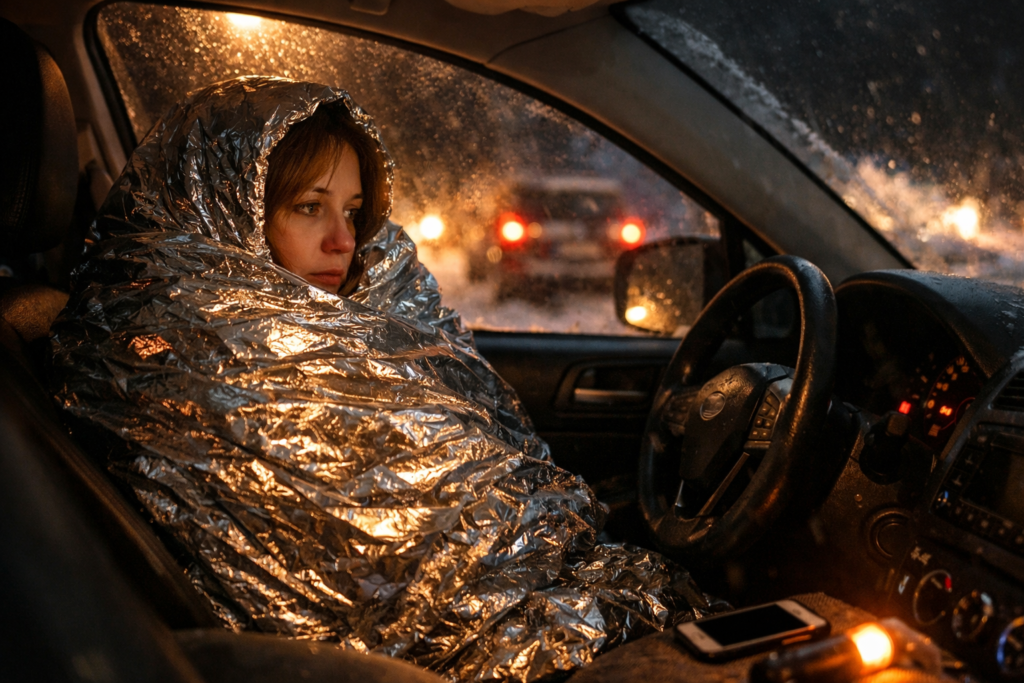
In winter or in climates with extreme heat, the comfort items become safety items. What keeps you uncomfortable in mild weather can keep you alive in extreme conditions.
First Aid
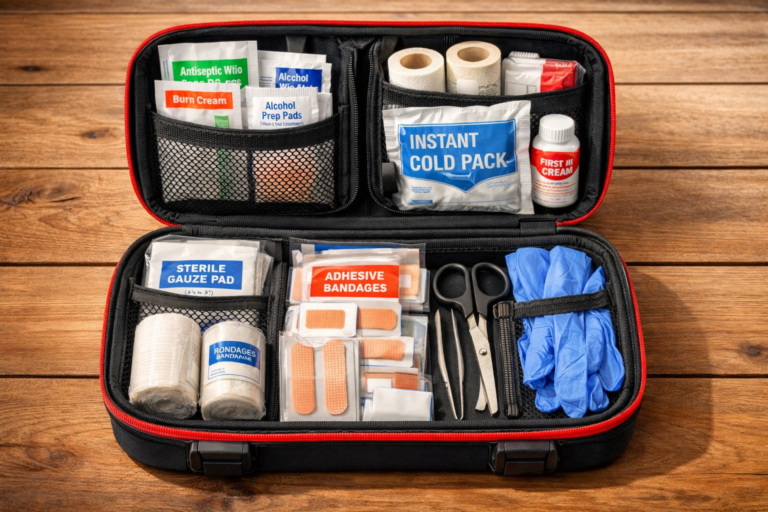
A compact first aid kit lives in the car permanently. It doesn’t need to be the same comprehensive kit as your home kit. It needs to cover the things that happen in car-related incidents:
- Adhesive bandages in multiple sizes
- Gauze pads and medical tape
- Antiseptic wipes
- Nitrile gloves — at least two pairs
- Pain reliever and antihistamine
- Any personal medications for household members who regularly travel in the vehicle — the same thinking that goes into what medications to have on hand at home applies here, just in smaller quantities
Pre-assembled compact kits in small hard cases work well for the car: they’re organized, sealed against moisture, and take up minimal space in a glove compartment or door pocket.
Visibility and Navigation
These items help in situations where seeing and being seen matter:
- Flashlight or headlamp with fresh or rechargeable batteries — essential for nighttime breakdowns, finding things under the hood, and signaling for help.
- High-visibility vest — inexpensive, packs flat, and makes you dramatically more visible to passing traffic if you’re working on the side of a road.
- Paper map of your region — GPS fails, phones die, and cell coverage disappears in exactly the places where you most need navigation. A paper backup costs less than $10 and lasts indefinitely.
Seasonal Additions Worth Considering
The base kit covers year-round needs. Seasonal items build on it:
- Winter: ice scraper, small shovel, cat litter or sand for traction, extra warm layers, hand warmers.
- Summer: sun shade for the windshield, extra water, cooling towel.
- If you drive in remote areas regularly: a more comprehensive first aid kit, a satellite communicator (Garmin inReach or SPOT), and a full-size spare instead of a compact spare.
Putting It Together
Keep the kit in a waterproof bag or hard case in the trunk or cargo area, somewhere accessible but out of the main cabin. Label it clearly. Let anyone who regularly drives the car know where it is.
Review it once a year: check that batteries are charged or replaced, that medications and food haven’t expired, and that the spare tire is properly inflated. A kit that isn’t maintained is only slightly better than no kit.
Knowing what to keep in your car for emergencies is useful precisely because car problems don’t schedule themselves. The kit is there for the Tuesday afternoon flat tire as much as for the dramatic snowstorm scenario, and those mundane situations are far more likely. It’s also one piece of a broader family emergency plan that covers more than just the car. Build the kit, maintain it, and then stop thinking about it.
What should every car have for emergencies?
At minimum: jumper cables or a portable jump starter, a tire inflator, reflective warning triangles, an emergency blanket, water, a flashlight, a compact first aid kit, and a phone charger. These cover the most common roadside emergencies and the situations where waiting becomes uncomfortable or dangerous.
How often should I check my car emergency kit?
Once a year is the practical minimum: check that batteries are charged, medications and food haven’t expired, and the spare tire is properly inflated. A good trigger is the same annual check you do for smoke detector batteries.
What is the most important thing to have in a car emergency kit?
It depends on the most likely emergency in your situation. For most drivers, a portable jump starter addresses the most common breakdown. In cold climates, an emergency blanket and warm layer could be the most critical items. The practical answer is to cover vehicle failure, personal safety, communication, and first aid. The kit does its job when all four areas are addressed.