Type how to build a 3-month food supply into a search bar and most guides assume you’re starting from a bunker blueprint: dozens of unfamiliar survival meals, a spare room to hold them, and a grocery budget most households don’t have. The version that actually works looks a lot less dramatic: you eat mostly what you already eat, buy a little more of it each week, store it a bit smarter, and rotate it so nothing goes to waste. Ninety days of food isn’t a doomsday stash. It’s the buffer that turns a layoff, a bad ice storm, or a month where the grocery bill jumped again from a genuine crisis into an inconvenience you can absorb.
Why Three Months, Not Three Days
Most emergency-kit advice stops at three days, because that’s the window FEMA’s own guidance plans around for immediate response — enough to get through a storm or a short evacuation, not a plant closing, a slow insurance claim, or a supply-chain hiccup that leaves shelves thin for weeks. The 2022 infant formula shortage put that math to the test: parents who assumed they’d restock within a few days ended up driving to five or six stores over several weeks looking for a single can. Three months sits in a useful middle zone. It’s long enough to absorb a real disruption to income or supply, and short enough that it doesn’t require converting a bedroom into a bunker or committing thousands of dollars up front.
It isn’t a finish line you either hit or fail, either. Most households build toward ninety days gradually, over several months, and plenty of families are genuinely better prepared at sixty days or forty-five days, long before they reach the full target. The number matters less than the direction. Every extra case of canned goods on the shelf is a week or two of slack that wasn’t there before, whether or not the household has technically reached “three months” yet.
Start With the List You Already Eat
The biggest mistake in food storage isn’t buying too little. It’s buying food nobody in the house will eat. A bucket of plain white rice looks impressive in a photo, but if your family has never cooked a pot of it on a normal Tuesday, it’ll sit there for a decade doing nothing useful — and it’ll be the first thing thrown out once it’s finally past its prime. Start instead with your own kitchen. Track what gets cooked over two or three ordinary weeks: the pasta nights, the canned-soup lunches, the cereal, the peanut butter sandwiches. Multiply that list out to cover ninety days and the result is a real plan, not a stranger’s idea of what survival food should look like.
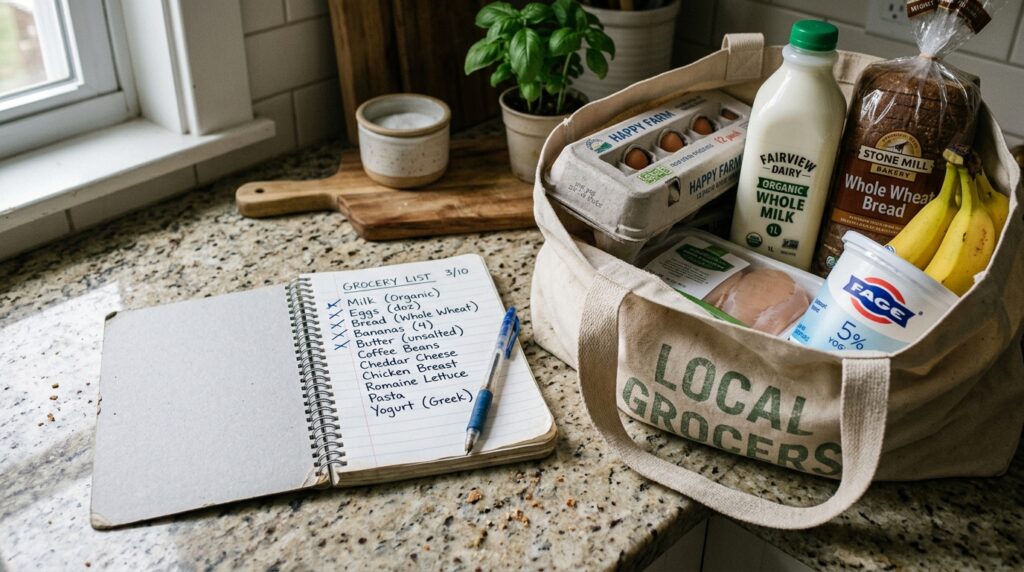
Go through two boxes of pasta a week, and that’s roughly two dozen boxes for the full ninety days. Lean on canned chicken, black beans, and a rotation of five or six regular dinners, and that’s the actual list to build from. The food in a working supply should look almost boring next to a “prepper pantry” photo online, and that’s the point. Boring food a family already eats gets used, rotated, and replaced. Exotic survival rations nobody enjoys just sit there until they expire.
Calories, Protein, and the Stuff That Keeps You Sane
A food supply that holds up under real use tends to break into three kinds of food, and most people only ever stock the first kind. The first is bulk calories — rice, dried beans, pasta, oats, flour — cheap, dense, and easy to store for years without much fuss. It’s the foundation, but it’s also the least interesting part of the plan, and a household eating nothing but rice and beans for ninety days is going to be miserable by week three.
The second kind is protein and the foods people notice missing once they’re gone: canned chicken and tuna, powdered milk, peanut butter, freeze-dried eggs, jarred pasta sauce, canned vegetables that don’t need refrigeration. This is what turns raw calories into meals a family still recognizes as their own cooking.
The third kind is what most guides skip entirely, and it’s what decides whether the whole system gets used or ignored — spices, condiments, coffee, tea, a bag of hard candy for the kids, hot sauce if that’s your household’s thing. None of it is essential in the strict nutritional sense, but morale is a real resource during a hard month. A supply that tastes like punishment doesn’t get touched the way one that still tastes like your own kitchen does. This is where learning how to build a 3-month food supply stops being an abstract checklist and starts becoming a system a household will actually keep up with.
Don’t Forget What Isn’t Food
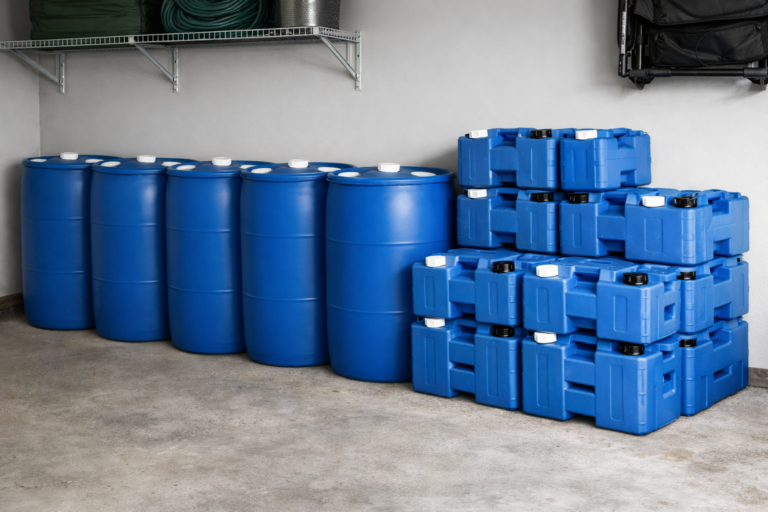
A food supply that ignores water isn’t really a food supply — it’s half of one. Water storage deserves its own planning around exact amounts and containers, a task worth tackling alongside this one (see how much water to store per person), but it belongs in the same conversation. Cooking rice or beans without water on hand isn’t much of a plan at all.
The same goes for the non-food items that make a ninety-day run livable rather than miserable: a manual can opener that doesn’t rely on electricity, a few weeks of prescription medications, pet food if there’s an animal in the house, diapers and wipes for little ones, and enough propane or fuel for a camp stove in case the power goes out for an extended run. None of these show up on a typical grocery-store “emergency food list,” and every one of them matters just as much as the calories do. A pantry full of canned soup doesn’t help much if there’s no way to open the cans or heat them.
The Weekly-Add Method — How to Afford This Without One Big Trip
Nobody needs to walk into a warehouse club and drop four hundred dollars in a single afternoon to pull this off. Add a few extra cans or an extra bag of rice to the normal cart each week, and the supply builds itself over a few months without ever feeling like a separate expense line in the budget. Watch for sale cycles — canned goods, pasta, and rice all run periodic discounts at most grocery chains, and stacking a coupon or a loyalty discount on top of a sale price is the cheapest realistic way to fill shelves.
Families on a tighter budget can set aside ten to twenty dollars a week just for this and still reach ninety days of coverage well within a year, often faster whenever a good sale rolls around. Speed isn’t the point. A supply built over six months out of ordinary grocery trips holds up just as well as one built in a single weekend, and it’s a lot easier on the bank account getting there.
A simple way to pace yourself without any tracking app or chart: pick one category a week. Week one, focus on rice and pasta. Week two, canned protein. Week three, canned vegetables. Cycling through categories instead of trying to buy everything at once keeps any single grocery trip from feeling overwhelming, and it naturally builds a supply with some variety in it rather than four hundred cans of the same soup.
Organize It So You Actually Use It
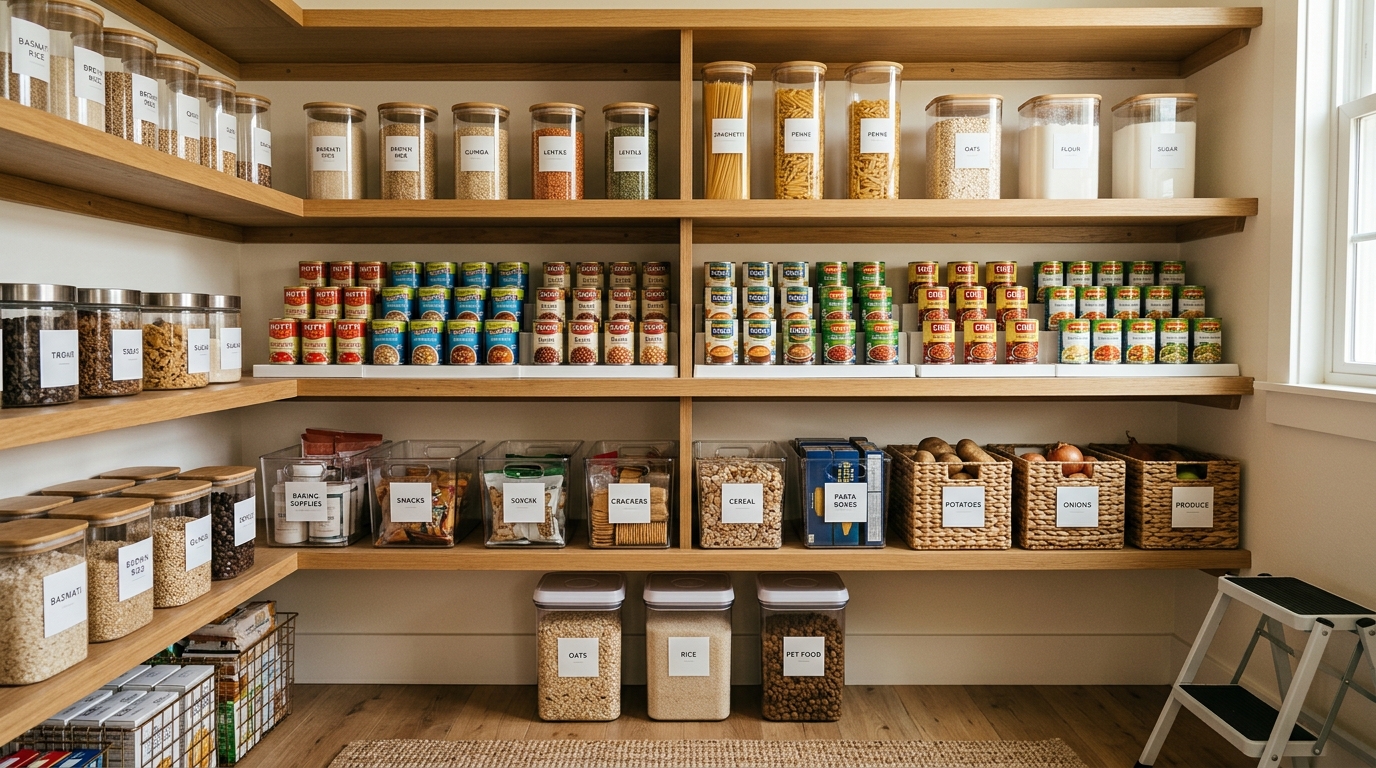
An unorganized stockpile is just clutter with an expiration date. Use the oldest-first rule religiously: new purchases go to the back of the shelf, older ones move to the front, so nothing expires unnoticed behind a case of soup that’s been forgotten. Food-grade buckets with gamma-seal lids work well for bulk dry goods like rice and flour, keeping pests and moisture out far better than the original packaging ever could.
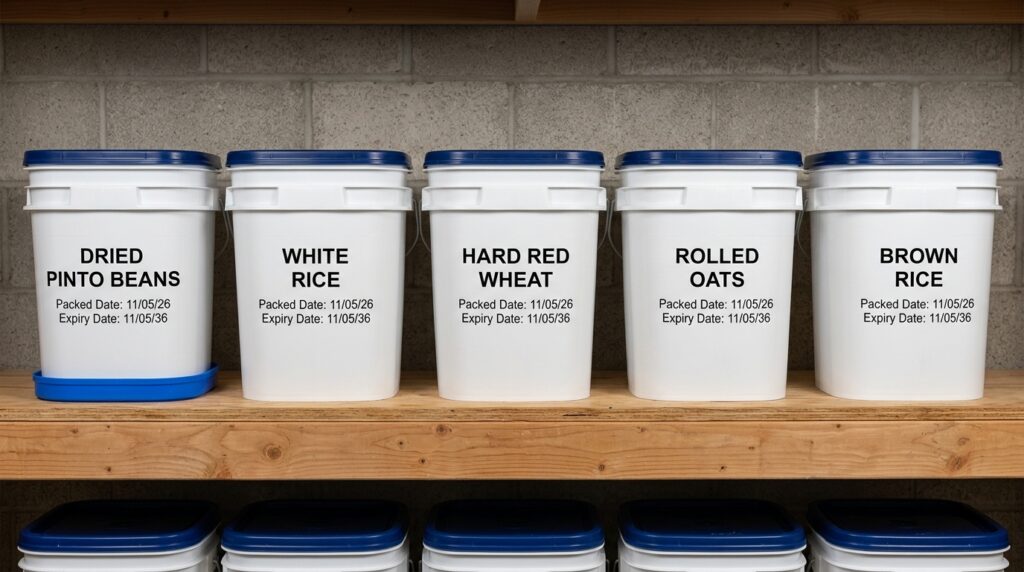
Clear bins, dated labels, and a simple running list — even a notebook taped inside a cabinet door — turn a random pile of cans into something manageable under pressure. Check the supply every few months, work whatever’s approaching its date into normal meals, and replace it on the next grocery run. When a date looks questionable, the USDA FoodKeeper app has specific shelf-life guidance for almost anything in a pantry, which beats guessing. That habit alone is most of what separates a supply that works from one that slowly rots in the back of a closet.
Common Mistakes That Sink a Food Supply Before It’s Tested
A few patterns show up again and again in households whose ninety-day supply looked great on paper and fell apart the moment it was tested for real. Buying food nobody likes tops the list — a pallet of unfamiliar freeze-dried meals sitting untouched because the family tried one packet and never opened another. Ignoring the can opener and the cooking method runs a close second. Plenty of well-stocked pantries have gone unused during a power outage because nobody thought through how to heat anything without electricity in the first place.
The third mistake is treating the supply as a one-time purchase instead of a rotating system. Food bought and forgotten in 2024 doesn’t help much if nobody checks it again until 2027. Building the habit of a quarterly walk-through, even a quick fifteen-minute one, is what keeps a food supply useful year after year instead of turning into an expensive shelf of regret.
A fourth mistake worth naming: building the whole supply around one shopping trip to one store. Prices and availability shift, and relying on a single warehouse club or supermarket chain means a shortage or a bad sale week there can stall the whole effort. Spreading purchases across a regular grocery store, a discount chain, and the occasional bulk-food aisle keeps the supply moving even when one supplier has a bad month.
Fold It Into Your Emergency Plan
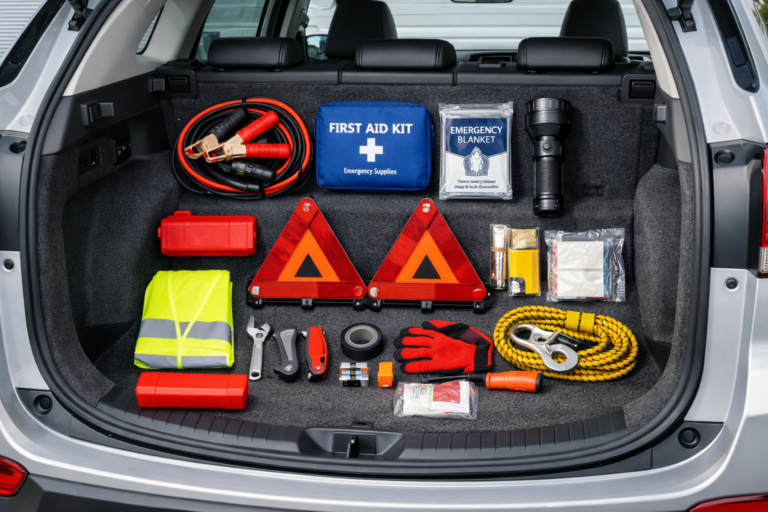
A food supply works best as one piece of a bigger picture, not a standalone task sitting off in its own corner of the garage. If your household already has a family emergency plan, your food supply should show up in it — where it’s stored, who checks it, how it fits alongside the water plan, and what happens if you have to shelter in place versus leave quickly. If you’re more likely to leave than shelter in place, the car needs its own kit, and the post on what to keep in your car for emergencies covers what goes in it. If that plan hasn’t been built yet, it’s worth doing alongside this one rather than after it. The two reinforce each other, and neither one does much good sitting in isolation from the other.
None of this requires a bunker mentality or a room nobody’s allowed to touch. The households that actually stick with a 3-month food supply are the ones who built it out of their normal grocery habits instead of a separate survival budget, and who keep using and replacing it instead of locking it away and hoping they never need it. Start with what’s already in the cart this week, add a little more each trip, and in a few months there’s something in the pantry that changes how a bad month feels — less like scrambling, more like already having handled it. That’s the entire idea behind how to build a 3-month food supply that a family actually keeps up with: it stops being a chore and becomes a habit.
How much does it cost to build a 3-month food supply?
For a family of four, plan on roughly $600 to $1,200 total if purchases are spread over several months and bought on sale, though costs vary by region and diet. Spreading it across 12–16 weekly grocery trips keeps it from ever feeling like a big hit to the budget.
Do I need special survival food to build a 90-day supply?
No. Freeze-dried survival buckets have their place, especially for long-term storage, but a working 3-month supply is mostly the same shelf-stable food a family already eats — canned goods, rice, pasta, and everyday staples — just in larger quantities.
How long does a 3-month food supply actually stay usable?
Most canned and dry goods stay safe well past their printed date if stored in a cool, dry place, often one to five years depending on the item. Rotating stock every few months and checking the USDA FoodKeeper app for specific items keeps quality high rather than just technically safe.